Frame the decision
Clarify what the executive team must decide and what it needs to understand in order to do so with evidence.

CORTE CONSULTORES · PROCESS ENGINEERING
To decide what to correct, prioritise or transform, an executive team needs to understand how the operation actually works. We examine and map the current state (the As-Is), comparing processes, documents, responsibilities, first-hand accounts and evidence to make gaps, risks and pending decisions visible.
Need a To-Be? Start with the As-Is.
Executive and consulting experience applied to real operational problems.
BEFORE INTERVENING
Consulting becomes useful when a relevant decision requires dispersed versions to be turned into a shared, evidence-based explanation of how the organisation operates today.
Clarify what the executive team must decide and what it needs to understand in order to do so with evidence.
Compare how the process actually works, including actors, decisions, exceptions and controls.
Compare documents, systems, first-hand accounts and evidence to distinguish symptoms, causes and unknowns.
Order what should be corrected, explored further or transformed, and what information is still needed before acting.
01 · RECOGNISABLE SITUATIONS
Problems are distributed across documents, systems, practices, decisions and accounts that do not always align.
Different areas describe the same process differently, or no common view exists.
Documents do not reflect practice, policies are missing or controls operate differently.
Delays, costs, risks and exceptions are not explained through a shared view.
02 · WHAT YOU GET
Depending on the question and agreed scope, the engagement may produce some of the following deliverables. They are configurable examples, not a standard package or a uniform commitment.
A shared representation of how the process operates today, including its actors, decisions, exceptions and controls.
Supported differences between what is expected, documented, stated and executed, together with their consequences.
Questions, data or evidence that still need to be resolved in order to support the decision.
An ordered view of what should be corrected, explored further or transformed, and why.
03 · WHERE WE CAN HELP
Each engagement combines the tools needed to answer a specific question, without forcing a standard package.
Represent how the process actually operates: actors, decisions, exceptions and controls.
Review consistency across documents, systems, accounts and practice.
Explain where clarity, traceability, accountability or performance is lost.
Recommend what should be clarified, measured or explored further.
04 · HOW WE WORK
The way of working adapts to the problem while retaining a recognisable logic.
Agree on what needs to be understood and the conditions that frame the work.
Examine, compare and map the current state with the people who know the operation and with sufficient evidence.
Explain findings, gaps and friction, and develop consistent recommendations.
The map is built with the people who know the operation.
05 · EXPERIENCE AND RESULTS
Nearly three decades in executive roles and consulting. Strategic perspective, operational knowledge and process discipline.
Permanent annual savings through operational efficiency.
Shorter response time for complaints.
Higher first-contact resolution.
Shorter production time · higher productivity.
Results achieved in different organisations and at different points in the career. They do not represent a future promise.
EXPERIENCE DEVELOPED IN ORGANISATIONS INCLUDING
Historical references from the professional track record. They do not imply a current relationship.
RECENT EXPERIENCE
06 · IDEAS
Processes, execution and the questions worth resolving before transformation.
25 SEP 2026
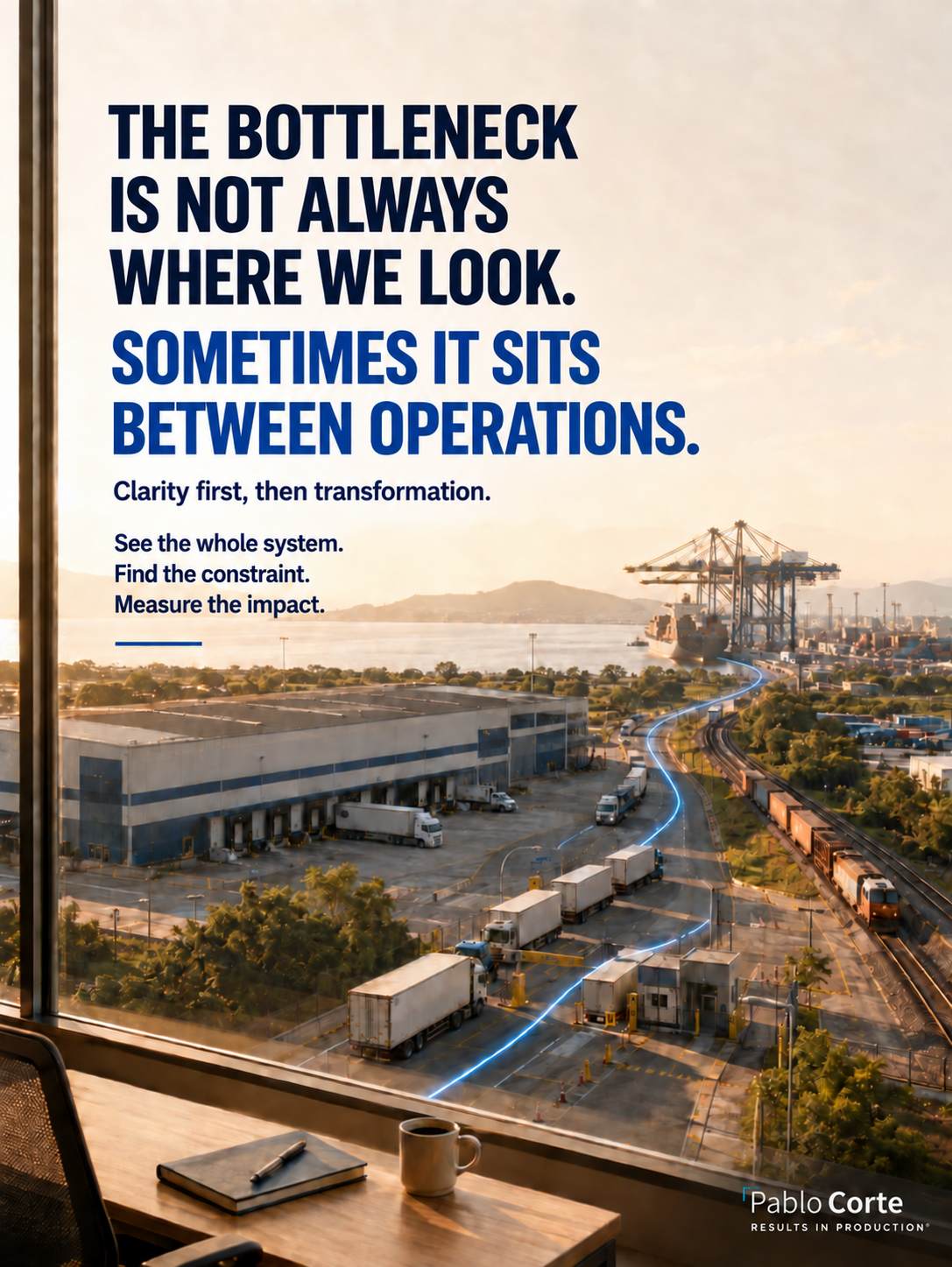
The most expensive problem may not sit inside an activity. It may exist between two teams, systems or decisions that no one is examining end to end.
READ IDEA →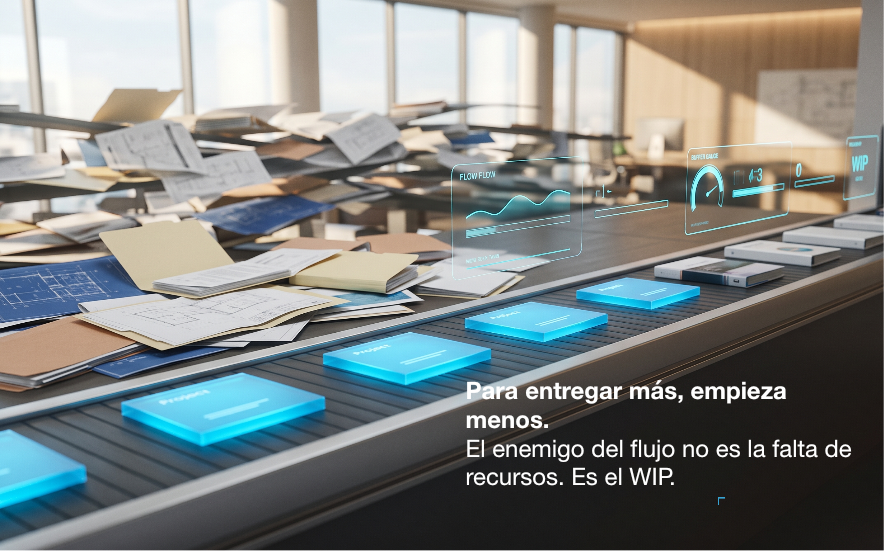
24 JUL 2026
Your portfolio is not slow because it lacks resources. It is slow because too many projects were opened at the same time. Mastering Flow brings the Theory of Constraints to the project portfolio: to deliver more, start fewer.
READ IDEA →
17 JUL 2026
A polished deck, a three-year roadmap, and eighteen months later the company operates exactly as before. The problem is usually not strategy. It is that no one truly knows how the company operates today.
READ IDEA →08 · MAP YOUR TERRAIN
Observe signals, gaps and information gaps in a specific process. The result is preliminary and based on the information you provide.