
On 19 October, SERNAC reported that Copec had compensated 1,612 people following a fault in a self-service fuel pump in Chillán in July. For 741 customers identified through Full Copec, CLP 10,000 vouchers were provided without requiring them to complete formalities or demonstrate that they had been directly affected. This response requires records, decision criteria and execution to be connected. The news report describes the compensation, not how responsibilities were distributed among teams.
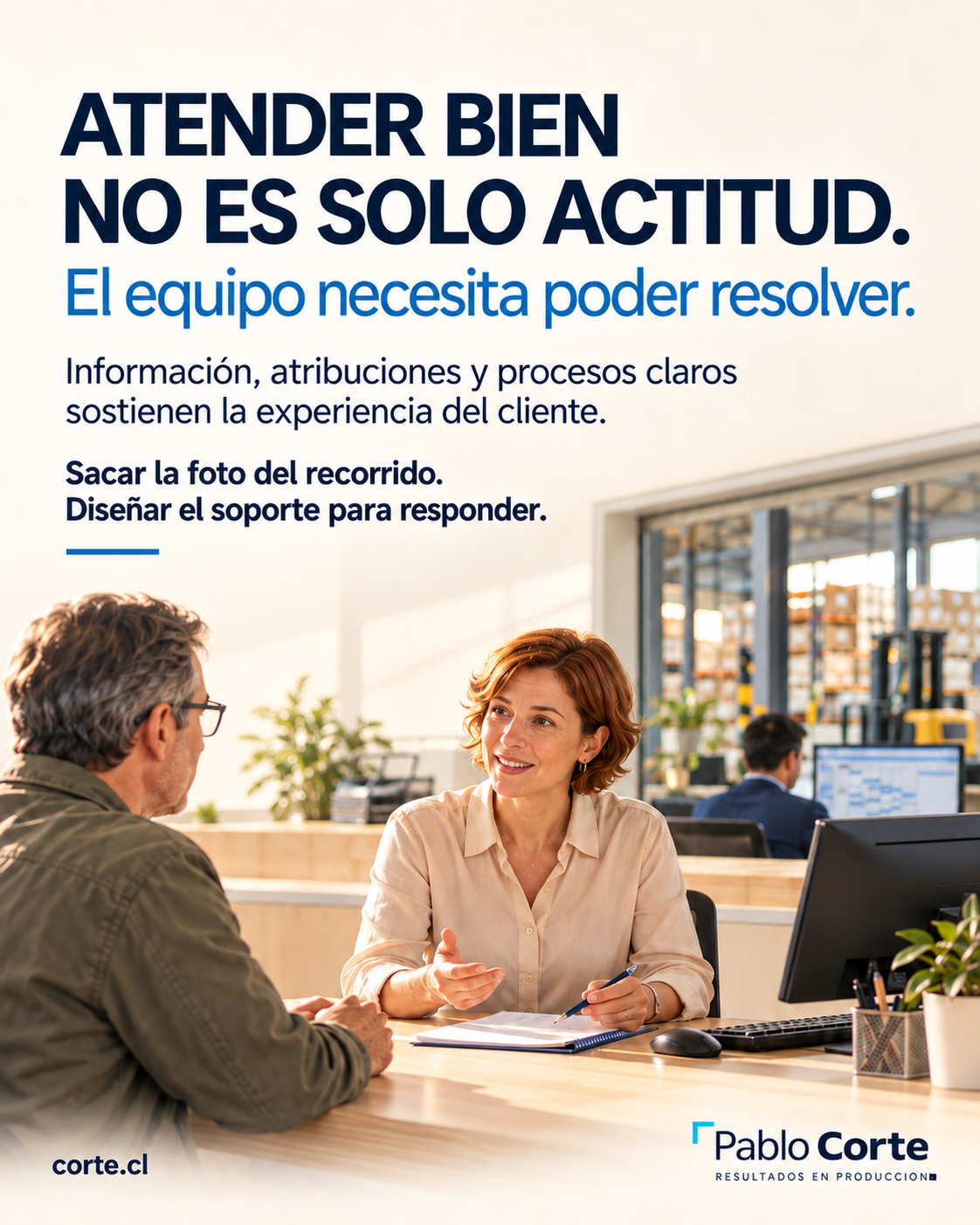
The operational question goes beyond this case: what support does the organisation give the person who must respond to the customer? If they cannot check the status of a request, make a decision or find the person responsible, asking them to provide better service does not resolve that difficulty. This is not a diagnosis of Copec, but a question that applies to any service business.
The Service Profit Chain model links the quality of internal support to employees' ability to deliver value, customer satisfaction and business results. It does not guarantee profitability. It invites us to examine what supports customer-facing staff, from information and decision-making authority to tools, workload and assistance.
So what?
In a proposal I prepared for an industrial company, I designed a matrix linking each stage of the journey to what the customer needs, what the employee needs and how to verify that both can achieve their objectives. The model was a reference for designing the future service based on gaps in the current process.
This approach requires a clear picture of the actual journey. At Corte Consultores, we compare processes, documents, systems and first-hand accounts as baseline evidence to build a shared understanding before recommending changes. Depending on the need, we connect customer experience (CX) with employees' working conditions (EX). A commitment to respond requires accessible information, clear criteria and end-to-end coordination.
Reducing searches, repeated queries and unnecessary approvals could free up capacity, lower costs and avoid additional contacts. We first need to establish where these burdens arise and how significant they are. Clarity first, then transformation.
My take:
If fulfilling a commitment to a customer requires an employee to compensate for gaps in the process every day, the company does not have an organisational service capability: it relies on individual effort and responsibilities that remain implicit. The question is not only how that person handled the customer, but what organisational support they had to resolve the issue.
#E2EProcesses #CustomerExperience #EmployeeExperience #ServiceProfitChain
A NECESSARY SEQUENCE
Clarity first,
then transformation.
PABLO CORTE · CORTE CONSULTORES
Executive experience and consulting applied to understanding processes, accountability, evidence and results.
KEEP OBSERVING
Other related ideas.

29 OCT 2026
A mandatory field does not make the data appear.
Before changing a system, understand where each piece of information originates, who validates it and how it reaches the person who needs it.
READ THE IDEA →
23 OCT 2026
A good report is no substitute for process control.
Closing a ticket does not always mean closing the process. Useful reporting requires definitions, sources and responsibilities to be aligned end to end.
READ THE IDEA →